

Fuel is among the highest operating costs for any fleet. At-pump prices sit outside a fleet's control, but fleets can reduce fuel costs by purchasing fuel more strategically, cutting unnecessary mileage and idling, improving driver efficiency, maintaining equipment, and using fuel data to mitigate waste.
In this guide, we'll cover 10 strategies for paying less per gallon and using fewer gallons, including fuel cards, smarter fuel stops, route planning, idle reduction, driver coaching, maintenance, weight management, fuel tracking, purchasing controls, and fuel credit, plus how much fleets can actually save.
1. Use a fleet fuel card to lower your cost per gallon
A fleet fuel card lowers your cost per gallon by giving drivers access to discounted pricing at participating truck stops. It's one of the most direct ways to reduce fuel costs because it requires no change to routes, loads, or schedules. Drivers fuel up the same way, just for less.
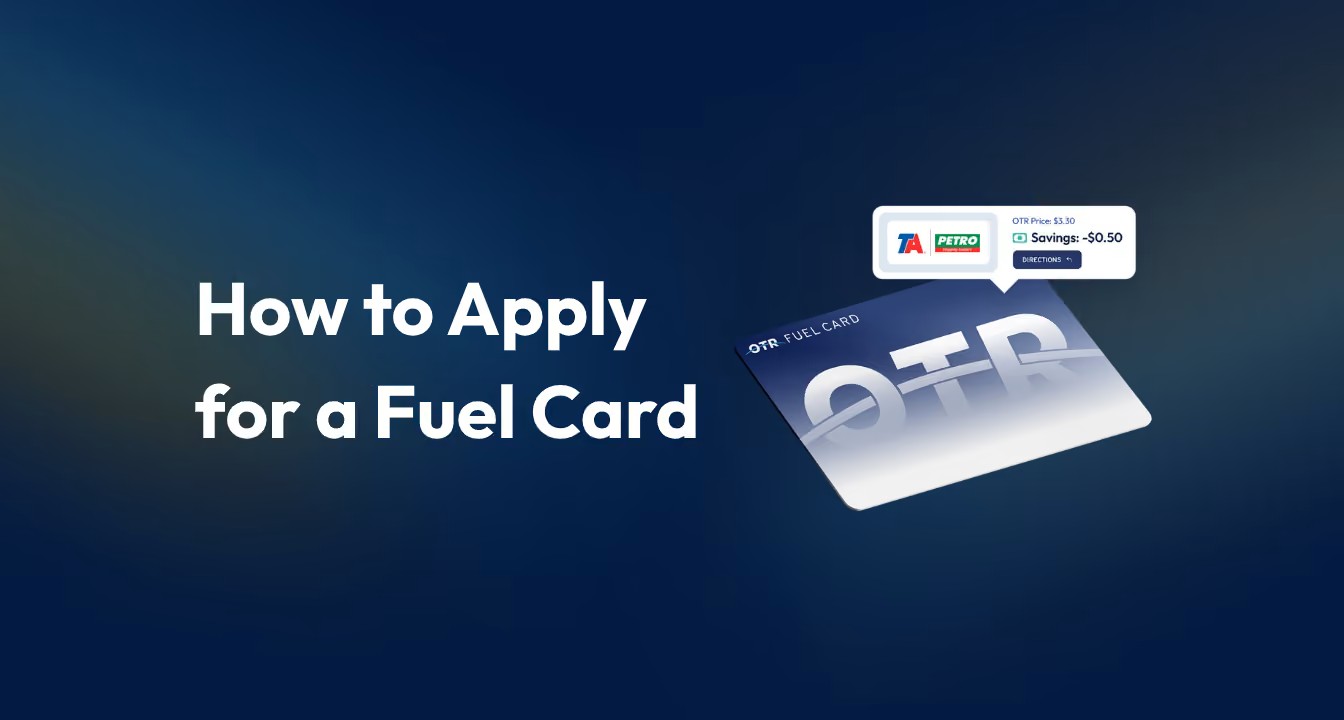
The OTR Fleet Fuel Card offers exclusive discounts at 3,000+ in-network locations, with average savings of $0.50 per gallon and $0 transaction fees at those stops. Across several trucks and thousands of gallons a month, that per-gallon difference adds up. Fleet managers can also track purchases in the OTR Mobile App.
2. Plan fuel stops around the best prices
The cheapest fuel stop isn't always the closest one, and small price gaps per gallon become real money at fleet scale. Fleets that plan fuel stops ahead of time, instead of leaving them to convenience, usually pay less for the same diesel.
- Compare prices along the route: Look at posted and discounted prices across the whole trip rather than defaulting to whatever station sits at the next exit.
- Factor in the detour: A cheaper station a few miles off route can lose its advantage once the extra mileage and drive time are counted.
- Plan stops before dispatch: Set fuel stops when the route is built, so drivers aren't making price decisions on the fly between loads or while driving.
- Use in-network fuel discounts: When using a fuel card, encourage drivers to fuel at participating in-network locations where their card offers the best discounts, whenever the route allows.
The Fuel Finder in the OTR Mobile App is a fuel planning tool that compares real-time diesel prices and shows discounted stops along a route. The OTR Fuel Card offers average savings of $0.50 per gallon at participating in-network locations. For a fleet buying 20,000 gallons a month, saving an average of $0.50 per gallon would reduce monthly fuel costs by $10,000.
3. Optimize routes to reduce unnecessary mileage
Route optimization reduces fuel costs by eliminating miles that never needed to be driven. Every deadhead or empty mile burns diesel without adding revenue, so tighter routing and dispatch planning lower fuel spend even when the price per gallon stays the same.
- Use route planning tools: Route and dispatch software helps cut the out-of-route miles that add up across a fleet over a month.
- Look past the shortest route: Traffic, construction, tolls, and terrain can make a slightly longer route the more fuel-efficient choice for the trip.
- Reduce deadhead where possible: Lining up backhauls and return-lane freight keeps trucks loaded for more of the miles they run each week.
- Coordinate dispatch and load planning: Dispatchers and load planners working from the same plan avoid repositioning moves that waste fuel and drive time.
Small routing gains compound across every truck. Fleets working to improve fleet fuel efficiency often find that routing and load planning deliver results faster than new equipment.
4. Reduce unnecessary idling
A truck can burn fuel for hours without moving a single mile, which makes excessive idling one of the most avoidable fuel expenses a fleet has. The goal is to cut idle time that serves no purpose.
- Track idle time by truck and driver: Telematics or driver reporting shows exactly where idle hours pile up across the fleet and which trucks need attention.
- Set a clear idling policy: Give drivers reasonable, written expectations for when the engine should be off during stops, breaks, and rest periods.
- Coach when patterns appear: Address repeat idle time with specific, one-on-one feedback instead of general reminders sent to the whole fleet.
- Allow for legitimate needs: Extreme heat, extreme cold, and certain safety or operational situations can justify idling, so policies should account for them.
The U.S. Department of Energy estimates that a heavy-duty truck uses about 0.8 gallons of fuel per hour while idling, and that a typical long-haul truck idles around 1,800 hours a year. At that rate, even an hour a day per truck adds up to hundreds of gallons a year.
5. Train drivers on fuel-efficient driving habits
Driver behavior has a direct effect on how much fuel each truck burns, which makes coaching one of the most practical ways to reduce consumption across a fleet. Good coaching focuses on specific habits that can be measured and improved.
- Excessive speed: Fuel burn climbs quickly at higher highway speeds, so steady, moderate cruising speeds help protect miles per gallon (MPG).
- Rapid acceleration and hard braking: Aggressive starts and sudden stops waste fuel that smoother, more patient driving keeps in the tank.
- Frequent speed changes: Constant speeding up and slowing down forces the engine to work harder than it needs to over a long run.
- Cruise control: Cruise control on open, flat highway helps hold a steady speed, though drivers should switch it off on steep grades.
- RPM range: Drivers who shift to keep the engine in its efficient RPM range save fuel, especially on trucks with manual transmissions.
Telematics and driver scorecards help fleets spot these patterns truck by truck instead of relying on broad training alone. Drivers tend to respond best when feedback is specific, fair, and compared against their own baseline.
6. Keep trucks on a preventive maintenance schedule
Poorly maintained equipment makes a truck work harder and burn more fuel to cover the same miles. A preventive maintenance schedule catches small problems before they drag down MPG, which reduces both fuel waste and unexpected repair costs.
- Tire pressure: Underinflated tires increase rolling resistance, so regular pressure checks are one of the simplest fuel-saving habits a fleet can build.
- Tire condition and alignment: Worn tires and poor alignment add drag and uneven wear that cost fuel steadily over time.
- Oil and fluid intervals: Recommended oil and fluid service intervals keep the engine running cleanly and efficiently between shop visits.
- Engine performance: Issues like a worn injector or a dragging brake can quietly reduce fuel economy for thousands of miles if left alone.
- Aerodynamic components: Damaged or missing side skirts, fairings, and other worn parts should be repaired or replaced as soon as they're found.
Preventive maintenance pays off twice: trucks stay on the road longer between repairs, and every mile costs a little less in fuel.
7. Manage truck weight and aerodynamics
The more resistance a truck has to push through, the more fuel it generally needs. Extra weight and aerodynamic drag both add resistance, especially at highway speeds, so managing them is a steady way to protect MPG.
- Cut unnecessary weight: Remove tools, spare parts, and equipment the truck doesn't need for the run so the engine isn't hauling dead weight.
- Distribute loads properly: Balanced loads spread weight evenly across axles and tires, which helps reduce rolling resistance and uneven tire wear.
- Maintain existing aerodynamic equipment: Side skirts, fairings, and gap reducers only help when they're intact and properly adjusted on the truck.
- Consider upgrades for highway work: Aerodynamic add-ons tend to pay off best on highway-heavy routes where trucks spend long stretches at speed.
- Match decisions to real operations: Base equipment choices on the fleet's actual routes, loads, and duty cycles rather than general averages.
Results vary widely by equipment and duty cycle, so fleets should weigh how each change affects semi-truck fuel economy on their own routes before investing across every truck.
8. Track fleet fuel consumption and cost per mile
Fleets can't cut fuel waste they can't see, which is why tracking fuel data is the foundation for every other strategy on this list. The right metrics show where fuel dollars are going and which trucks, drivers, or routes are costing more than they should.
- Total fuel spend and gallons purchased: These two numbers set the baseline for every comparison that follows, month over month.
- Average price per gallon: This shows how well drivers are using discounted locations and the fuel stops planned before dispatch.
- Miles per gallon: MPG tracked by truck reveals equipment problems or driving habits that need attention before they get expensive.
- Fuel cost per mile: This ties fuel spending directly to the work each truck is doing, regardless of how many miles it ran.
- Idle time: Idle hours tracked by truck point straight to avoidable fuel waste that coaching and clear policies can reduce.
- Fuel spend by vehicle, driver, or route: Spend broken down this way makes outliers easy to spot and easier to fix.
The goal is to find outliers and trends, not to collect data for its own sake. Total spend can rise simply because trucks ran more miles. Fuel cost per mile adjusts for that, and fleets can calculate cost per mile by dividing fuel spend by total miles driven.
9. Set fuel purchasing policies and monitor for misuse
Fuel purchasing policies control how, when, and where drivers buy fuel, which keeps spending predictable and makes misuse easier to catch. Where strategy one lowers the price per gallon, this strategy makes sure the fleet only pays for fuel it actually needs.
- Approved locations: Set preferred fueling locations or networks so every driver knows where they're expected to fuel on a typical run.
- Clear expectations: Spell out when and where drivers should fuel so purchasing decisions don't vary from one driver to the next.
- Gallons against capacity and mileage: Compare gallons purchased with each truck's tank size and miles driven to flag fill-ups that don't add up.
- Unusual transactions: Watch for repeat purchases in short windows, off-route fueling, and other activity that falls outside a driver's normal patterns.
- Card controls: Use fuel card controls where available, such as spending limits on the OTR Fuel Card, to keep purchases in line.
- Regular reviews: Review purchasing data on a set schedule instead of waiting for a problem to surface on its own.
Strong controls also protect against fuel fraud, from side fueling to skimmed cards, which can drain a fleet's fuel budget over time.
10. Use fuel credit to protect your cashflow
Fuel credit doesn't necessarily lower the price per gallon, but it can make fuel expenses easier to manage without tying up as much cash. Fleets often pay for fuel days or weeks before brokers pay for the loads that fuel moved, and that gap widens with every truck.
- Room to keep trucks fueled: A credit line for fuel gives fleets purchasing capacity in the stretch between fueling up and getting paid for the load.
- Cash for other expenses: Fuel credit helps preserve cash for payroll, maintenance, repairs, insurance, and other operating expenses that can't wait.
- Terms worth reviewing: Fleets should still evaluate limits, repayment requirements, and overall cost before relying on any credit line for fuel.
OTR offers a fuel card line of credit for carriers who factor with OTR, including fleets new to OTR that sign up for Fleet Factoring and the OTR Fuel Card at the same time. There's no credit check, and fleets settle the balance on a weekly billing cycle.
How much can fleets save on fuel costs?
There isn't one universal amount a fleet can save, because results depend on fuel volume, current MPG, routes, driver habits, equipment, and the discounts available; the same factors that decide whether fuel cards save money. Even small per-gallon improvements, though, turn into substantial savings when multiplied across an entire fleet.
Example: a fleet buying 50,000 gallons per month
- $0.05 less per gallon = $2,500 per month
- $0.10 less per gallon = $5,000 per month
- $0.25 less per gallon = $12,500 per month
- $0.50 less per gallon = $25,000 per month
This is a hypothetical example of how savings can scale, not a guaranteed OTR savings estimate, and fleets can plug in their own numbers with the fuel savings calculator. Fleets that burn fewer gallons through better routing, less idling, regular maintenance, and efficient driving stack those savings on top of any purchasing discount.
Build a fleet fuel strategy around both price and efficiency
Lower fleet fuel costs come from two things working together: buying fuel more strategically and burning less of it. Fleets that combine discounted purchasing, smarter fuel stops, route planning, driver coaching, maintenance, and regular fuel monitoring have more control over one of their largest operating expenses.
The OTR Fuel Card delivers average savings of $0.50 per gallon at 3,000+ in-network locations, and the Fuel Finder in the OTR Mobile App shows where to save along each route. Carriers who factor with OTR can also access fuel credit to keep trucks fueled between payments.
Sign up for the OTR Fuel Card and start saving at the pump.
Frequently asked questions
What is the best way to reduce fleet fuel costs?
The best approach combines lower purchase prices with lower consumption. Fleets save the most when they pair fuel card discounts and planned fuel stops with route optimization, reduced idling, efficient driving, and preventive maintenance across every truck.
How can fleets reduce fuel consumption?
Fleets reduce fuel consumption by improving MPG and cutting wasted miles. The biggest levers are driver behavior, smarter routing, less idling, proper tire pressure, regular maintenance, less unnecessary weight, and well-maintained aerodynamic equipment.
How do fuel cards help fleets save money?
Fuel cards lower the price per gallon through discounted network pricing and give fleet managers better control over purchases. Whether fuel cards save money for a specific fleet depends on fuel volume, how well the network fits its routes, and fees.
What should fleets track to manage fuel costs?
Fleets should track MPG, fuel cost per mile, gallons purchased, average price per gallon, idle time, and fuel spend by vehicle. Regular reviews of these numbers help managers spot outliers and trends before small problems turn expensive.